
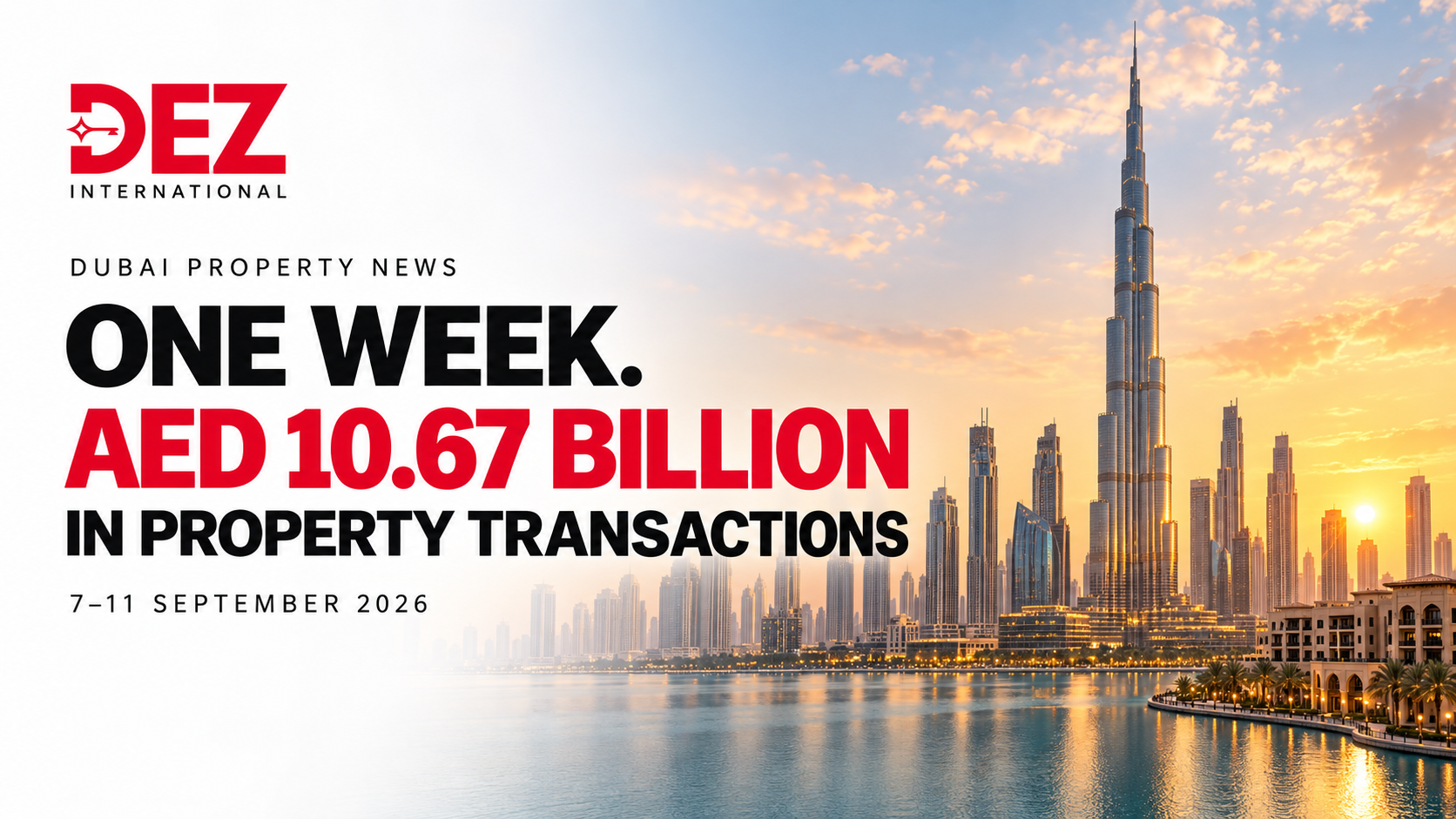
Dubai records AED 10.67 billion in property transactions in one week
7–11 September 2026: AED 6.78 billion in sales across 2,931 deals, within AED 10.67 billion in total property transactions.
Read the full updatePractical context for buyers and investors, written to support clearer property decisions.
7–11 September 2026: AED 6.78 billion in sales across 2,931 deals, within AED 10.67 billion in total property transactions.
Read the full update

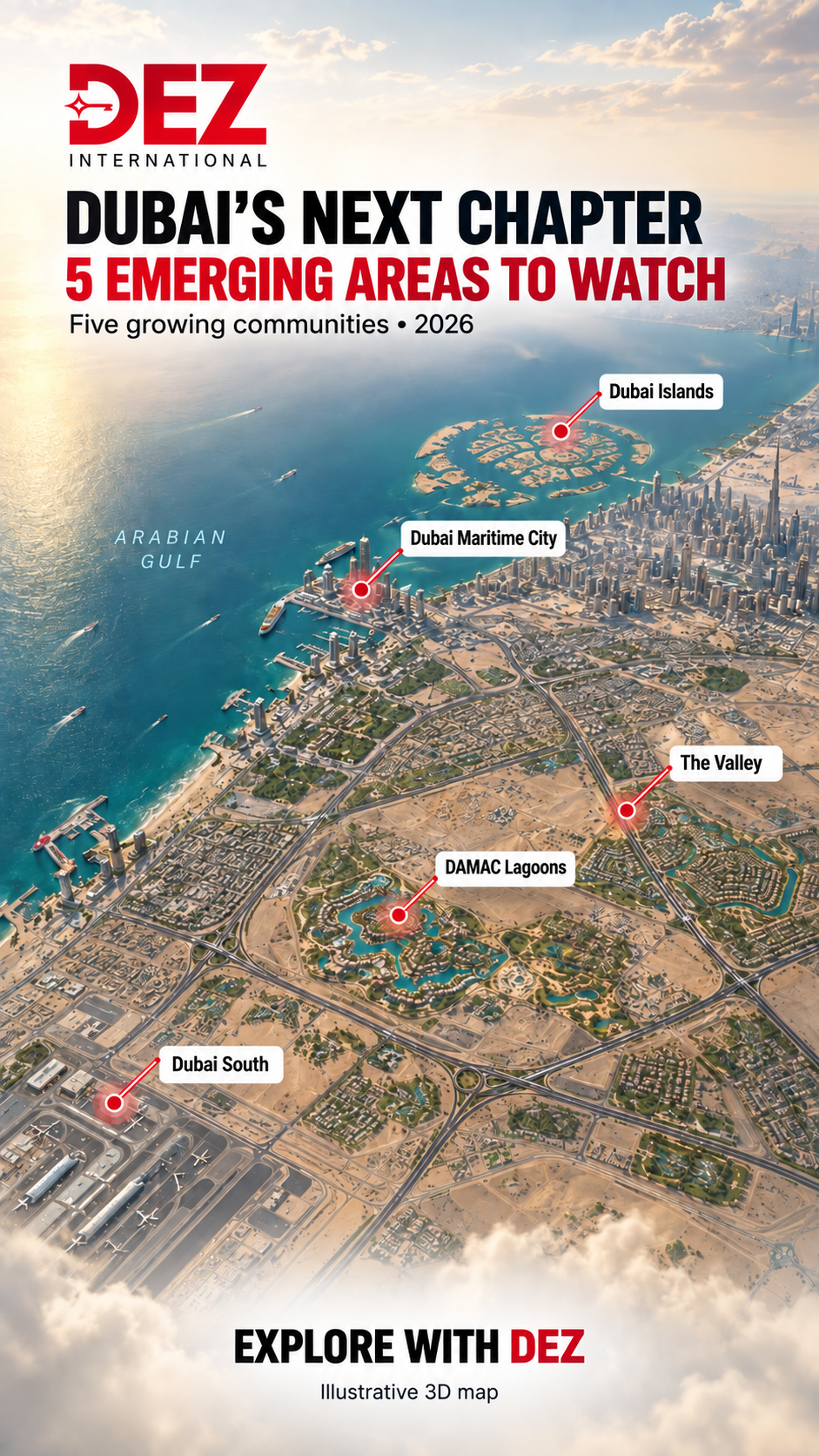
Five locations shaped by new communities and major infrastructure: Dubai South, Dubai Islands, Dubai Maritime City, DAMAC Lagoons and The Valley.
Read the full update
The GCC is preparing a unified tourist visa intended to make multi-country Gulf travel easier. The launch date, eligibility rules and application portal still await an official announcement.
Read the full update
A practical framework for comparing locations, developers, payment plans and long-term demand before purchasing in Dubai.
Define the purpose of the purchase first: income, capital growth, personal use or a blended objective.
Compare total acquisition cost and holding strategy—not headline price alone—and verify the developer, construction status and contract terms.
A good shortlist should make trade-offs visible across location, supply, payment timing and likely tenant or buyer demand.

What buyers should compare when considering one of Dubai’s best-known waterfront communities.
Palm Jumeirah combines beachfront living, hospitality and established international demand, but building quality and access differ by address.
Review service charges, usable area, view protection and the balance between private residence and short-stay activity.
The right choice depends on whether privacy, beach access, rental demand or branded service matters most to you.

A measured view of the infrastructure, population and supply factors shaping the next phase of the market.
Population growth, connectivity and employment creation remain important demand signals, but performance will vary by submarket.
Future supply should be read alongside delivery timing, product quality and the depth of end-user demand.
Investors benefit from comparing scenarios rather than relying on one forecast: hold period, liquidity and unit selection still matter.